Oregon Contractor Deposit Rules (2026): No Cap, but Over 50% Carries Risk
Oregon sets no cap on contractor deposits, but taking more than half and then not performing allows license probation. From ORS 701.312.
Not legal advice. General information from each state's statutes, checked Oct 20, 2026. Local rules and the facts of your contract can change the answer; for a specific contract, ask a lawyer licensed in your state.
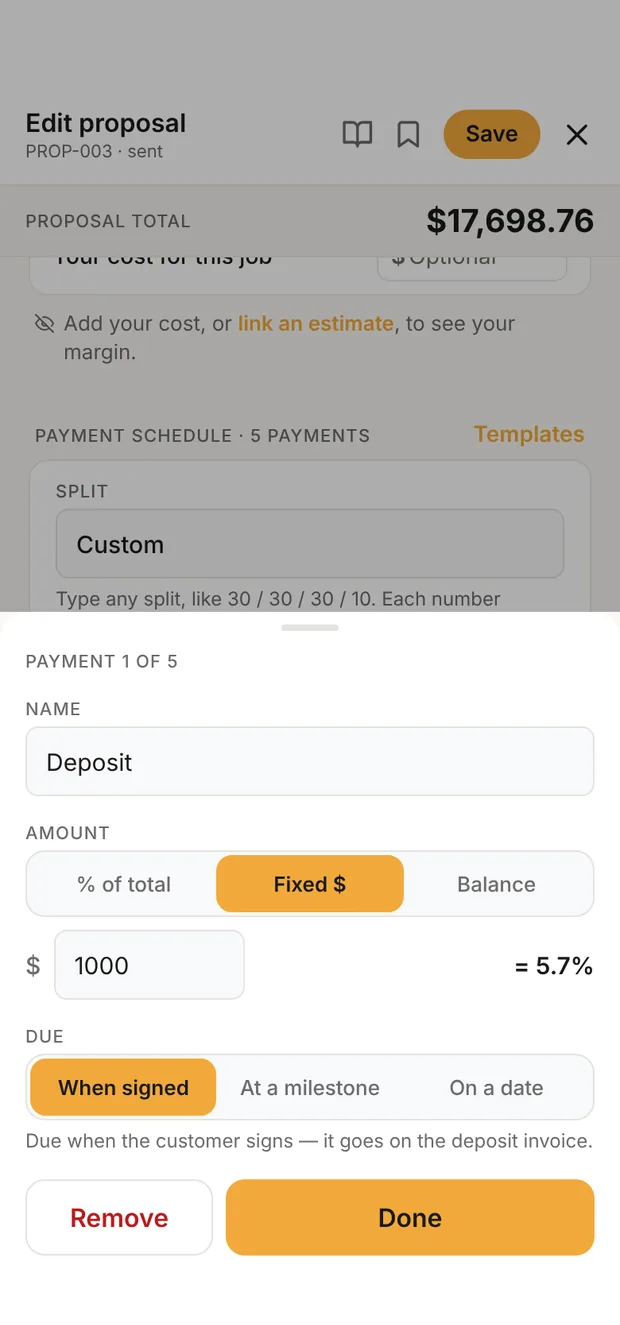
Set the deposit
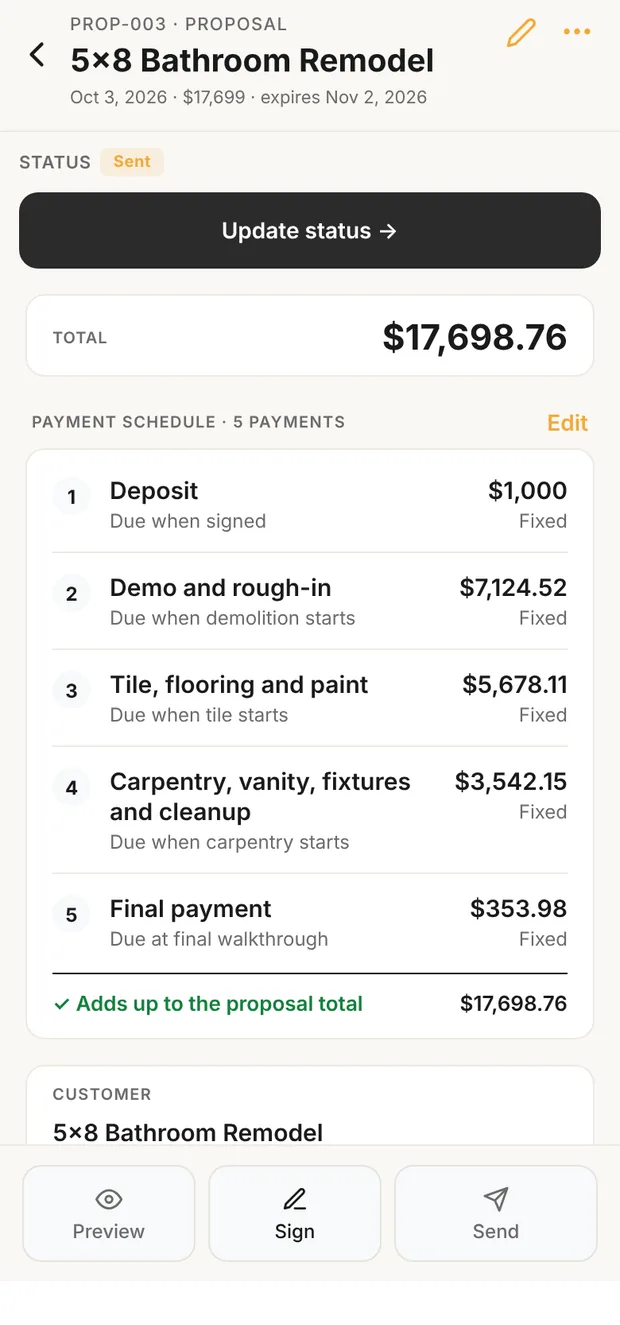
Every payment tied to a stage
The deposit and payment schedule in the Clamp app: a $1,000 deposit due when the customer signs, then every other payment tied to a stage of the job. $1,000 on this $17,699 bathroom is under every state's cap. Sample data.
What the law says
“accepts a deposit of more than 50 percent of the total contract price and”
The maximum deposit, worked
| Contract price | How it works out | Maximum deposit |
|---|---|---|
| $8,000 | More than $4,000, plus failing to perform or refund | No cap |
| $25,000 | More than $12,500, plus failing to perform or refund | No cap |
| $60,000 | More than $30,000, plus failing to perform or refund | No cap |
What the rule does
What triggers probation
A deposit of more than 50 percent, and then failing to perform diligently, or failing to perform and not returning the deposit within 10 days after a reasonable demand.
Not a cap
HB 3385 (2023) and HB 3860 (2025) proposed a hard 50% cap. Neither passed.
Oregon deposit questions
Is it illegal for an Oregon contractor to take more than 50% down?
No. It becomes grounds for probation only if the contractor then fails to perform, or fails to refund within 10 days of a reasonable demand.
Compare other states
How we checked
We read each state's statute or licensing rule on the official legislature or agency site and quote it as written. Where the official site would not load, the row says so and names the copy we read. A state stays "still being checked" until we have read the full rule; we never mark it "no cap" before then. Last checked .
This guide explains what the statutes say. It is not legal advice; for a specific contract, ask a lawyer licensed in your state.